Blogs
Get latest insights on what's trending in the HR world - Talent Search, Talent Assessments, Psychometrics, Employee Engagement, Appraisals & much more.

Why a High Engagement Score Can Still Hide Attrition Risk
Your engagement score may be high. Your attrition risk may still be higher than you think.
This is the uncomfortable reality many organizations discover too late. The survey results look positive. Employees say they are proud of the organization. They like their teams. They have positive relationships with their managers. The dashboard shows a strong overall engagement score.
Then, a few months later, key employees start leaving.
The issue is not that the engagement survey lacked value. The issue is that the organization interpreted the results only at the surface level.
A high engagement score can create confidence. But without deeper diagnostics, it can also create blind spots.
Engagement Is Not the Same as Retention
Engagement tells you how connected employees feel to their work, team, manager, and organization. Retention is a different question. It asks: “Do employees see enough reason to stay?”
An employee can be engaged and still be open to leaving. They may enjoy their work but feel underpaid. They may like their manager but see no career growth. They may be proud of the brand but feel burnt out. They may be emotionally committed today but professionally uncertain about tomorrow.
That is why an overall engagement score alone cannot reliably indicate retention risk.
It can tell you whether employees are positive. It cannot always tell you whether they are secure, committed, and likely to stay.
The Trap of the Overall Score
Overall scores are useful, but they compress complexity.
An organization may have an engagement score of 82%. On paper, that looks strong. But beneath that number, the story may be very different:
- Employees with 1–3 years of tenure may feel stuck.
- High performers may feel under-recognized.
- A specific region may show rising workload stress.
- A demographic segment, such as women in mid-management, may report lower psychological safety.
- Younger employees may like the culture but doubt long-term growth.
The “Positive but Vulnerable” Employee
One of the most important groups hidden inside engagement data is the “positive but vulnerable” employee.
These employees are not visibly disengaged. In fact, they may score the organization well on pride, teamwork, manager support, and culture. But they may quietly show risk on questions such as:
- “I see a long-term future for myself here.”
- “I have opportunities to grow in this organization.”
- “My workload is sustainable.”
- “My contribution is recognized.”
- “My compensation feels fair.”
- “I would recommend this organization as a place to work.”
This is the group organizations often fail to notice. They are positive enough to look safe, but uncertain enough to leave.
And because many of them are capable, ambitious, and attractive to the external talent market, they may be the very people the organization cannot afford to lose.
Why Deeper Diagnostics Matter
A good engagement report should not only answer, “How engaged are our employees?”
It should answer, “Where is engagement strong, where is it fragile, and where is it hiding risk?”
Two teams can have the same engagement score but completely different realities.
Team A may have high trust, strong recognition, clear growth, and high intent to stay. That is healthy engagement.
Team B may have high pride and team bonding, but weak growth, poor reward fairness, and rising workload stress. That is fragile engagement.
If both teams have an engagement score of 80%, a surface-level report treats them equally.
A diagnostic report does not.
It separates healthy engagement from vulnerable engagement.
What Deeper Reporting Should Reveal
Deeper people data diagnostics help leaders move from score-reading to decision-making. They reveal:
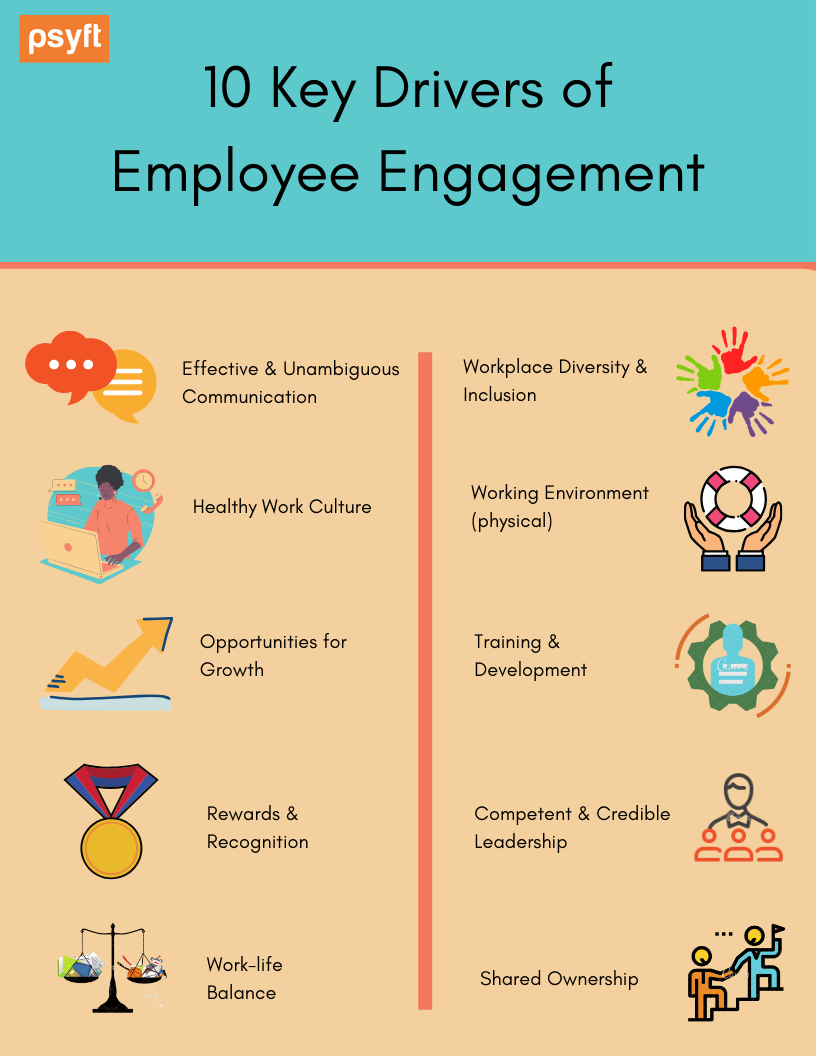
- What is driving engagement: Is it manager quality, growth, recognition, rewards, workload, leadership trust, or role clarity?
- Where risk is concentrated: Which function, grade, tenure group, location, or demographic segment needs attention?
- Which scores are misleading: Where are employees positive overall but weak on intent to stay?
- What open-ended comments are really saying: Are employees talking about stalled careers, workload fatigue, pay concerns, manager inconsistency, or leadership communication gaps?
- What leaders should prioritize first: Which actions are most likely to improve both engagement and retention?
This is the difference between a survey report and a diagnostic tool.
A report presents data.
A diagnostic tool explains what the data means.
The Real Business Risk
Attrition is not just an HR problem. It affects productivity, customer continuity, team morale, leadership pipelines, replacement cost, and institutional knowledge.
The risk becomes even greater when attrition affects high performers, niche skill holders, client-facing employees, future leaders, or hard-to-replace roles.
That is why leadership teams need to ask better questions after an engagement survey:
- Which employees are engaged but still at risk?
- Which groups are positive today but uncertain about the future?
- Which drivers are most connected to intent to stay?
- Where are we seeing early signs of burnout, stagnation, or dissatisfaction?
- What should we act on first?
These questions cannot be answered by one overall engagement score. They require diagnostic depth.
From Engagement Score to People Risk Intelligence
Organizations do not need longer reports. They need sharper insight. They need to know where to act, why it matters, and what could happen if they do not act.
This is where Psyft’s people data diagnostics approach becomes valuable. Instead of stopping at overall engagement scores and dashboard-level summaries, Psyft helps organizations look deeper into workforce sentiment, segment-level patterns, hidden risk areas, and business-relevant action priorities.
The shift is simple but powerful.
From: “Here is our engagement score.” To: “Here are the groups at risk, the factors influencing them, the hidden signals beneath the score, and the actions most likely to improve retention.”
A high engagement score may look good in a presentation. But if it hides attrition risk, the organization is not truly listening.
The real value of engagement measurement is not in celebrating the number. It is in understanding what the number is hiding.
Recent Articles
- When Everyone Wants WFH - Tips To Manage An Expanding Team Of Remote Employees
- 5 Proven Strategies To Retain Your Best Talent In 2022
- Why Organizations Should Take Exit Surveys Seriously
- How To Create A Culture Of Recognition In The Workplace
- Why Manager Effectiveness Survey Is Important For A Workplace
News Center
- India Today - 7 reasons companies ask for psychometric tests
- Business World - AI - The New Secret Sauce in Psychometric Assessments
- DNA - HR Trends for 2018
- The Hindu - Psychometric Assessment a "game changer" in hiring
- Entrepreneur - 9 ways to promote actionable feedback at organisations
- Human Capital - Looking Beyond Performance Appraisals